Mudjacking & Concrete Leveling in Fort Collins & Northern Colorado
Sunken, uneven, or settled concrete slabs are more than an eyesore. They are a tripping hazard, a drainage problem, and in many cases a symptom of soil conditions beneath the slab that will continue to cause progressive settling if the underlying cause is not addressed. In Northern Colorado, the combination of expansive clay soils, freeze-thaw cycling, seasonal moisture fluctuations, and soil erosion creates conditions that cause concrete slabs to settle unevenly at a rate far exceeding what homeowners in more geologically stable regions experience. Driveways develop lips and low spots. Sidewalk panels tilt and create edges that catch feet and wheels. Patio slabs sink toward the house rather than away from it, directing water toward the foundation. Pool decks become uneven and unsafe. Steps sink away from the structure and create gaps that grow wider every season.
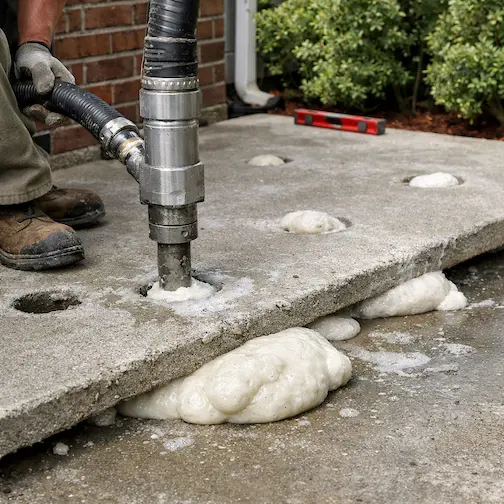
Mudjacking, also known as slabjacking or concrete leveling, is a proven, cost-effective method for restoring sunken concrete slabs to their original level position without the expense, disruption, and waste of full concrete replacement. At Fort Collins Foundation Repair, our mudjacking service injects a carefully formulated slurry beneath settled slabs to fill voids, compact loose soil, and hydraulically lift the concrete back to its correct elevation. The process is minimally invasive, produces results immediately, and addresses the void and soil conditions that caused the settlement rather than simply covering the problem with new concrete placed over the same failing substrate.
We serve homeowners and property owners throughout Fort Collins, Loveland, Greeley, Windsor, Wellington, Timnath, and the surrounding communities of Larimer and Weld counties. If you have sunken or uneven concrete on your property, fill out our estimate form today for a free assessment and quote.
Why Mudjacking Is the Smart Choice for Sunken Concrete in Northern Colorado
When a concrete slab settles, the instinctive response for many homeowners is to consider full replacement. Tear out the old slab, haul it away, compact the subbase, pour new concrete, and wait for it to cure. This approach is expensive, time-consuming, and generates significant material waste. It also does nothing to address the soil conditions that caused the original slab to settle. New concrete poured over the same failing subgrade will settle again, often within a few years, repeating the cycle at the same cost.
Mudjacking addresses the problem differently and more fundamentally. Rather than replacing the slab, it restores it by filling the voids that have formed beneath it, densifying the loose or eroded soil that allowed those voids to develop, and hydraulically lifting the slab back to its original elevation using the injected material as a stable support base. The existing concrete, which in most cases is structurally sound and simply lacks adequate support beneath it, is preserved and repositioned rather than demolished and replaced. The result is a level slab supported by a consolidated substrate, achieved at a fraction of the cost of replacement, with significantly less disruption to the surrounding landscape and hardscape.
In Northern Colorado, where expansive clay soils respond dramatically to moisture changes and where freeze-thaw cycling creates annual heave and settlement in concrete that is not adequately supported, mudjacking is a particularly well-suited solution because the injected slurry material is stable and resistant to the moisture-driven volume changes that cause native clay soils to behave so unpredictably beneath concrete slabs. By replacing the void and loose soil beneath the slab with a consolidated, stable fill material, mudjacking reduces the susceptibility of the slab to future settlement driven by the same soil dynamics that caused the original problem.
Beyond the structural and financial case for mudjacking, uneven concrete is a genuine safety concern. The trip hazard created by a one-inch or greater offset between adjacent sidewalk panels is responsible for a significant number of pedestrian injuries each year. A sunken patio slab that directs water toward the foundation contributes directly to the moisture management problems that drive basement and crawl space deterioration. Addressing settled concrete promptly protects both the people who use the space and the structural systems of the home nearby.
Concrete Areas We Level and Restore
- Driveways with sunken sections, low spots, or lips at panel joints
- Sidewalks with tilted or offset panels that create tripping hazards
- Patio slabs that have settled toward the home or developed drainage problems
- Pool decks with uneven sections around the perimeter
- Garage floor slabs with settled areas near the door opening or interior low spots
- Concrete steps that have sunk away from the structure and created gaps
- Front entry stoops and landing slabs that have settled and tilted
- Basement floor slabs with localized settlement or heave
- Commercial sidewalks, parking areas, and exterior slabs
- Concrete aprons at garage door openings that have settled below the door threshold
- Concrete around exterior HVAC equipment pads that have shifted out of level
- Any exterior concrete surface that has settled unevenly and requires restoration to a level, safe, and properly draining condition
If you have settled or uneven concrete anywhere on your property and are not sure whether mudjacking is the right solution, fill out our estimate form and we will assess the slab condition and provide a clear recommendation.
Get a Free Concrete Leveling Estimate
Fill out the secure form below to request your free mudjacking and concrete leveling estimate. Our team will assess the settled areas on your property, evaluate the slab condition and underlying soil situation, and provide a clear quote for restoring your concrete to a level, safe, and properly draining condition. There is no cost and no obligation involved in requesting your estimate.
Our Mudjacking Process, Step by Step
Mudjacking is a precise, controlled process that requires accurate assessment of the slab conditions, careful drilling, controlled injection, and methodical monitoring of slab movement during lifting to achieve a level result without overlifting or creating new stress points in the concrete. Our process follows a defined sequence developed through extensive experience with the specific soil conditions and concrete behaviors common to properties throughout Northern Colorado.
Every mudjacking job begins with a thorough on-site assessment of the settled concrete, the condition of the slab surface, the degree and pattern of settlement, and the likely soil conditions beneath the slab based on the settlement pattern and the property’s history. This assessment determines the drilling pattern, the injection sequence, and the estimated volume of slurry material required to fill the voids and achieve the desired lift. An accurate pre-job assessment is what distinguishes a controlled, precise leveling from an unpredictable process that risks cracking an already-stressed slab or achieving uneven results.
The process itself is minimally disruptive. Most residential mudjacking projects can be completed within a few hours, and the treated concrete can typically accept light foot traffic the same day. Vehicles and heavy loads are held off for a short curing period after which the restored slab is ready for full use. The drill holes used for injection are small and are filled and finished at the completion of the job, leaving a clean, restored surface.
We walk you through the completed work before leaving, verify the lift results against the target elevation, and explain what follow-up monitoring is appropriate for the specific conditions at your property.
- On-site assessment and settlement mapping: Walk the full extent of the settled concrete, measure the degree of settlement at multiple points, assess the slab condition for existing cracks, spalling, and structural integrity, and map the settlement pattern to determine the void distribution and injection approach required to achieve an even lift.
- Soil and drainage condition evaluation: Assess the likely causes of settlement based on the pattern and location of the slab movement, the proximity to drainage features, the age of the concrete, and any visible signs of erosion, soil washout, or organic decomposition beneath the slab edge. This evaluation informs the injection strategy and any recommendations for site drainage improvements that would reduce the risk of future settlement.
- Drilling pattern layout and hole placement: Mark the injection hole locations on the slab surface according to the planned drilling pattern. Hole placement is determined by the settlement pattern, the slab panel layout, and the locations where void filling and lifting force will be most effective. Holes are typically spaced at intervals of one to two feet in areas of significant settlement and positioned to achieve balanced lift across each slab section.
- Core drilling through the slab: Drill through the concrete slab at each marked location using a rotary hammer drill with a core bit sized for the injection fitting. Drill depth penetrates through the full slab thickness to reach the void and soil layer beneath. Core drilling produces a clean, round hole that accepts the injection fitting securely and can be patched cleanly after the injection is complete.
- Slurry preparation and mixing: Prepare the mudjacking slurry to the appropriate consistency for the conditions present. The slurry is typically a mixture of Portland cement, water, and fine aggregate materials proportioned to achieve the flowability needed to travel through the injection lines and fill voids completely, while maintaining sufficient body to support the slab and resist future settlement. Mix proportions are adjusted based on the void characteristics and soil conditions identified during the assessment.
- Controlled slurry injection: Insert the injection fitting into each drilled hole and pump the slurry beneath the slab under controlled pressure. Injection proceeds at a measured rate that allows the slurry to flow into and fill the void space before building the pressure needed to begin lifting the slab. The injection sequence moves from the areas of deepest settlement outward, filling the largest voids first and progressively building support under the areas of greatest deflection.
- Continuous slab movement monitoring during injection: Monitor the slab surface continuously during injection using a level and visual reference points to track the lift in real time. Injection at each hole is halted when the target elevation is approached, and the next hole in the sequence is opened to continue filling and lifting. This controlled, monitored approach prevents overlifting, distributes the lift evenly across the slab, and allows adjustment of the injection sequence if the slab is responding unevenly to the slurry pressure.
- Final elevation verification and adjustment: After injection at all planned holes is complete, verify the final slab elevation at multiple points against the target grade using a precision level. If any areas require minor additional lift or if adjacent panels need adjustment to achieve consistent elevation transitions, supplemental injection or mechanical adjustment is performed at this stage before the holes are patched.
- Injection hole patching and surface finishing: Fill all drilled injection holes with a cement-based patching compound matched to the color and texture of the surrounding concrete as closely as practical. Finish the patch surface flush with the slab surface and clean the surrounding area of any slurry material that has surfaced during injection. The patched holes are small, typically one to two inches in diameter, and blend reasonably well with the existing concrete surface.
- Post-job walkthrough and follow-up guidance: Walk the completed work with the homeowner, verify the lift results and drainage direction of the restored slab, explain the curing period and load restrictions, and provide guidance on monitoring the concrete going forward and on any site drainage improvements that would reduce the risk of future settlement at this location.
Replacing settled concrete costs significantly more than leveling it, takes longer, and does nothing to address the soil conditions that caused the settlement in the first place. Mudjacking from Fort Collins Foundation Repair restores your concrete to a level, safe, and properly draining condition at a fraction of replacement cost, with same-day results and minimal disruption to your property.
Schedule Your Free Concrete Leveling EstimateMudjacking Projects Across Fort Collins & Northern Colorado
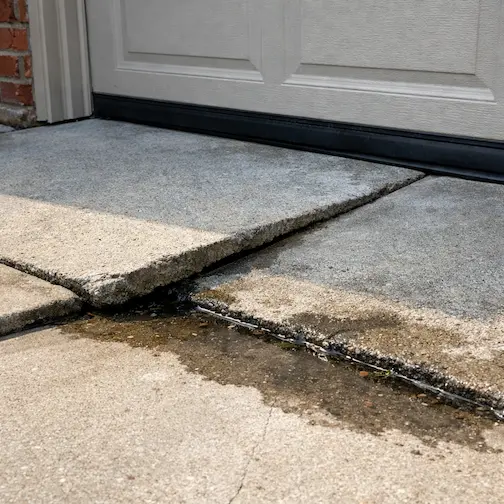
Before: Driveway slab settled two inches below the adjacent panel, creating a significant lip and directing water pooling at the low point near the garage door opening.
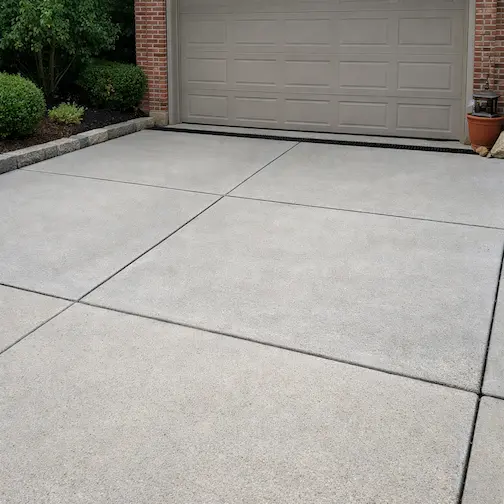
After: Driveway slab restored to level with adjacent panels, drainage corrected, and injection holes patched flush with the existing concrete surface.
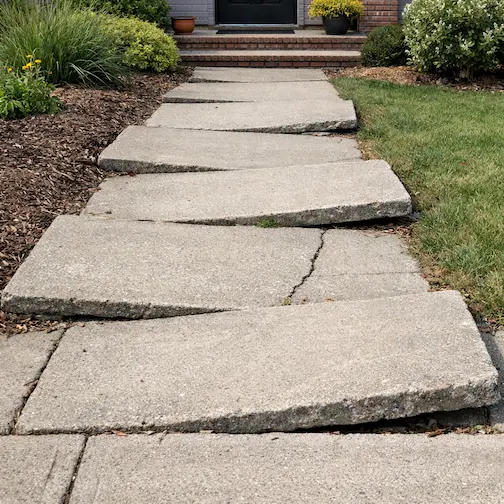
Before: Sidewalk panels tilted and offset at joints, creating a trip hazard at multiple locations along the walkway approach to the front entry.
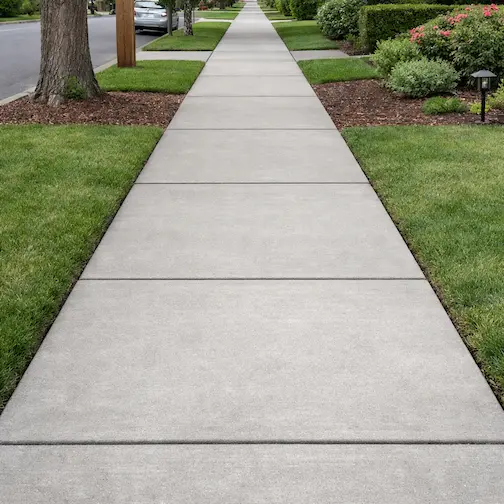
After: Sidewalk panels restored to consistent elevation, trip hazards eliminated, and a smooth transition between panels achieved across the full length of the walkway.
Mudjacking Details, Materials, and Considerations
Understanding how mudjacking works, what materials are used, where it is most effective, and where its limitations lie helps homeowners make informed decisions about whether it is the right solution for their specific concrete situation. Here is a detailed look at the key considerations involved.
The Mudjacking Slurry Material
The slurry injected beneath a settled slab during mudjacking is a carefully proportioned mixture of Portland cement, water, and fine aggregate, typically soil, sand, or a combination of both, mixed to a consistency that balances flowability with structural support capacity. The slurry must be fluid enough to travel through the injection lines and spread into void spaces beneath the slab, yet thick enough to support the concrete weight once in place and to resist future consolidation under load. In Northern Colorado, where soils with high clay content can behave unpredictably when mixed with water, our slurry formulation is adjusted to produce a stable, non-expansive fill material that provides consistent support without being subject to the same volume changes that caused the original settlement. Once cured, the hardened slurry provides a dense, stable bearing surface beneath the slab that is more resistant to the moisture-driven soil movement common in this region than the original native subgrade.
When Mudjacking Is the Right Solution
Mudjacking is most effective and most appropriate when the concrete slab being leveled is structurally sound but has settled due to void formation, soil consolidation, erosion, or organic decomposition beneath the slab. The ideal candidate for mudjacking is a slab that is intact or has only minor cracking, has settled relatively uniformly across a panel or section, and is resting on soil conditions that will support the injected fill material without further significant movement. Driveways, sidewalks, patios, pool decks, and garage slabs that meet these criteria are strong candidates for mudjacking as a cost-effective alternative to full replacement. The method works particularly well on slabs that have settled at one end or along one edge, where the void beneath the low side can be filled systematically to restore level conditions across the full panel.
When Replacement May Be a Better Option
Mudjacking is not the right solution in every situation, and part of our assessment service is giving you an honest evaluation of whether leveling or replacement is more appropriate for your specific slab. Concrete that is severely cracked, broken into multiple pieces, significantly spalled across its full depth, or structurally deteriorated to the point where it no longer has adequate integrity to withstand the lifting forces involved in mudjacking is generally a better candidate for removal and replacement. Slabs that have settled due to active drainage problems that have not been corrected may continue to settle after mudjacking if the drainage issue remains. Very thin slabs, slabs with reinforcing steel that has corroded and expanded to produce cracking, and slabs in areas with active tree root intrusion may also be better served by replacement in some cases. We give you a straightforward assessment of which approach makes more sense for your situation based on what we actually observe during the on-site evaluation.
Cost Comparison: Mudjacking vs. Concrete Replacement
The cost difference between mudjacking and full concrete replacement is substantial and is consistently one of the most compelling reasons homeowners choose leveling for suitable slabs. Concrete replacement involves the cost of demolition and debris removal, subbase preparation, forming, concrete material, pouring and finishing labor, and the time required for curing before the surface can be used. Mudjacking involves the cost of the slurry material, the drilling, injection, and monitoring labor, and the hole patching, with no demolition, no hauling, no forming, and no extended cure time. For a typical residential driveway panel or patio section, mudjacking typically costs significantly less than replacement while restoring the same functional result. The savings are most pronounced on larger areas where the demolition and replacement costs scale with square footage while the mudjacking cost scales primarily with the degree of settlement and the volume of void fill required.
Curing Time and Return to Service
One of the practical advantages of mudjacking over concrete replacement is the rapid return to service after the work is complete. The injected slurry begins to set relatively quickly after injection, and in most cases the treated concrete surface can accept light foot traffic within a few hours of job completion. Vehicle traffic and heavier loads are typically restricted for a period following injection to allow the slurry to achieve adequate strength before being subjected to concentrated loads. The exact curing period depends on the slurry mix proportions, ambient temperature, and moisture conditions at the time of the job. We provide specific return-to-service guidance for each project based on the conditions present at the time of installation. In the context of Northern Colorado’s climate, cooler temperatures in fall and spring can extend curing times somewhat, which we account for in our project scheduling and post-job guidance.
Addressing the Root Cause: Drainage and Soil Conditions
Mudjacking restores a settled slab to level and fills the voids beneath it, but it does not by itself address the site drainage or soil conditions that caused the voids to form in the first place. For mudjacking to provide lasting results, the underlying cause of the settlement should be understood and, where practical, mitigated. Common causes of concrete settlement in Northern Colorado include poor drainage that concentrates water beneath the slab and erodes or softens the subgrade, downspouts that discharge near the slab and repeatedly saturate the soil beneath it, tree roots that have grown beneath the slab and created voids as they decomposed, and expansive clay soil behavior that has produced differential movement beneath the slab. Our assessment process identifies the likely cause of settlement and provides recommendations for drainage improvements, downspout extensions, root barriers, or other corrective measures that would reduce the risk of recurrence after mudjacking. Addressing these contributing factors in conjunction with the leveling work produces the most durable and long-lasting outcome.
Environmental Considerations
From an environmental perspective, mudjacking is a significantly more sustainable choice than concrete replacement in most applicable situations. Concrete replacement generates substantial construction waste in the form of demolished slab material that must be hauled to a disposal facility. The production of new concrete requires significant energy and produces carbon emissions associated with cement manufacturing. Mudjacking preserves the existing concrete, eliminating the demolition waste and the new material production entirely. The slurry materials used in mudjacking are generally composed of natural mineral materials with a relatively low environmental footprint. For homeowners and property managers who are mindful of the environmental impact of their property maintenance decisions, mudjacking offers a compelling advantage over replacement that goes beyond the cost savings alone.
Why Concrete Settles Faster in Northern Colorado Than in Many Other Regions
Expansive Clay Soils Create Annual Heave and Settlement Cycles
The clay-dominant soils throughout Larimer and Weld counties are among the primary reasons concrete settles more aggressively and more unpredictably in Northern Colorado than in regions with sandier or more stable soil profiles. These soils expand when they absorb moisture and contract when they dry out, creating upward heave forces during wet periods and settlement as the soil loses volume during dry periods. Concrete slabs that rest directly on clay subgrades without adequate base preparation are subject to this annual cycle of movement, which progressively loosens the contact between the slab and the soil beneath it, creates voids at the points where the soil has contracted most significantly, and leads to the uneven settlement that homeowners notice as tilted panels, raised edges, and low spots in their driveways and walkways. Understanding this soil behavior is essential to both addressing the current settlement with mudjacking and minimizing recurrence by managing the moisture conditions around the slab going forward.
Freeze-Thaw Cycling Accelerates Void Formation
Fort Collins and the surrounding region experience repeated freeze-thaw cycles throughout the winter and early spring months. When moisture in the soil beneath a concrete slab freezes, it expands and pushes the slab upward. When it thaws, the slab settles back down, but not always to the same position it occupied before freezing because the thawed soil may have shifted, compressed, or lost some of its density during the freeze-thaw event. Over multiple seasons, this cyclical heaving and settling progressively loosens the subgrade beneath exterior concrete slabs and creates the void conditions that mudjacking addresses. Slabs that are exposed to significant moisture from poor drainage or from snowmelt ponding experience this cycle most aggressively because there is more water present in the subgrade to freeze and thaw with each temperature event.
Erosion from Snowmelt and Irrigation Removes Subgrade Support
The high annual moisture volumes that Northern Colorado properties receive through spring snowmelt and summer irrigation create erosion conditions beneath exterior concrete slabs that gradually remove the fine soil particles that provide subgrade support. Water that flows beneath a slab edge, whether from downspout discharge, surface runoff, or irrigation overspray, carries fine soil particles with it as it moves, leaving behind a progressively larger void as particles are washed away over successive wet seasons. This erosion-driven void formation is distinct from the clay shrinkage mechanism but produces the same result: a slab with no support beneath it at the void location that settles under its own weight as the void grows. Mudjacking fills these erosion voids with a stable, non-erodible slurry material that restores support and is not subject to the same washout process that removed the original soil.
Restore Your Concrete Without the Cost and Disruption of Replacement
Sunken concrete does not have to mean a full replacement project. In most cases, mudjacking from Fort Collins Foundation Repair restores settled slabs to level, safe, and properly draining condition at a fraction of the cost of replacement, with results visible the same day and minimal disruption to your property. We serve homeowners and property owners throughout Fort Collins, Loveland, Greeley, Windsor, and the surrounding Northern Colorado communities with honest assessments, precise leveling work, and straightforward guidance on the drainage and soil conditions that contribute to concrete settlement in this region. The estimate is free, the assessment is thorough, and there is no obligation to proceed until you are confident the solution is right for your property. Fill out the form above and let our team take a look at your settled concrete today.
Contact Us for Your Free Concrete Leveling Estimate