Bowed Wall Repair in Fort Collins & Northern Colorado
A bowed foundation wall is more than just an eyesore—it is a warning sign that outside pressure is pushing your basement or crawlspace walls inward. In Fort Collins and across Northern Colorado, expansive soils and moisture can create powerful lateral forces that cause walls to bulge, crack, and gradually lean toward the interior of your home or business.
At Fort Collins Foundation Repair, we specialize in bowed wall repair solutions that stabilize compromised walls and help prevent further structural movement. Whether you have noticed a slight inward curve or a wall that is visibly bowing, our team evaluates the severity of the problem and recommends repair methods such as wall anchors, steel braces, or carbon fiber straps based on your specific foundation and soil conditions.
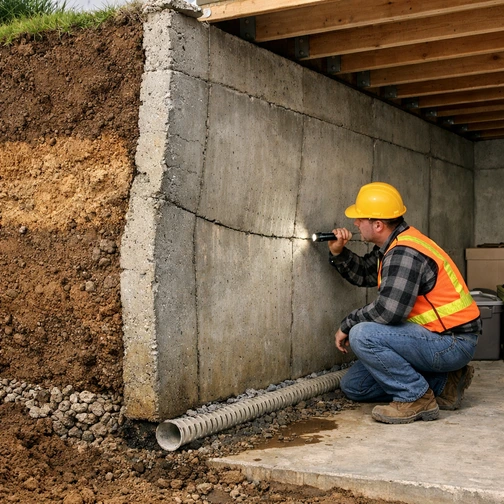
What Is a Bowed Foundation Wall?
A bowed foundation wall is a wall that has begun to curve or lean inward instead of staying straight and plumb. This usually happens in basement or crawlspace walls that are retaining soil on the outside. Over time, pressure from the surrounding soil and water builds up until the wall starts to deflect inward, often at the center of the wall span.
Unlike small vertical shrinkage cracks, bowed walls are a structural concern. The wall is being pushed beyond its intended design, and that movement can worsen if the underlying cause is not addressed. Left alone, a severely bowed wall can crack, leak, and in extreme cases partially or fully fail, putting the rest of the structure at risk.
If you see a wall that is no longer straight, even if the bowing seems minor, it is important to have it evaluated. The earlier you intervene, the more repair options you typically have and the easier it is to stabilize the wall without major reconstruction.
Warning Signs of Bowed Walls
- Horizontal cracks running along the middle or upper third of a basement wall
- Walls that visually bulge or curve inward toward the basement interior
- Stair-step cracks in block or brick walls near the bowing area
- Water seepage or damp spots where the wall is bending
- Gaps between the wall and the ends of floor joists or beams
- Difficulty opening or closing nearby doors and windows upstairs
Any of these signs can indicate excess soil and water pressure pushing against your foundation. A professional inspection will determine how serious the movement is and what repair options make sense for your home.
Get a Free Bowed Wall Repair Estimate
Use the secure form below to request your free bowed wall inspection and repair estimate. Our team will review your information and contact you to schedule a convenient time to assess your foundation.
Our Bowed Wall Inspection & Repair Process
When you contact Fort Collins Foundation Repair about a bowed wall, we do far more than give it a quick glance. Our process is designed to determine how much the wall has moved, what is causing the pressure, and which repair approach will best stabilize the wall and protect your home.
- Listen & observe: We start by listening to your concerns and reviewing what you have noticed—cracks, dampness, or visible wall movement.
- Interior wall assessment: We examine the bowing wall from the inside, checking for horizontal cracks, displacement, and any impact on floors or framing.
- Exterior and drainage review: Outside, we look at grading, downspouts, and other drainage features that may be allowing water and hydrostatic pressure to build up against the wall.
- Measure movement: We document the amount of inward movement and any related cracking so we can categorize the severity of the bowing.
- Recommend repair options: Based on the wall type, soil conditions, and amount of movement, we recommend solutions such as wall anchors, steel braces, or carbon fiber straps and explain how each option works.
- Provide a clear estimate: You receive a written estimate outlining the recommended repair method and scope of work so you can move forward with confidence.
Bowed walls do not fix themselves, and the longer they are left alone, the more the wall can move. Scheduling a professional inspection now can help you avoid more costly structural repairs later.
Schedule Your Free Bowed Wall InspectionBowed Wall Repair Projects in Northern Colorado
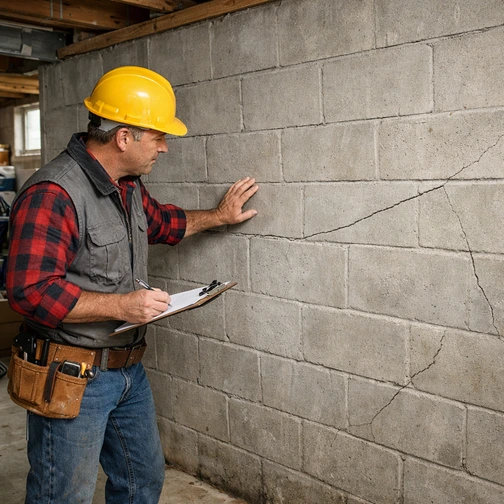
Basement wall with horizontal cracking and inward bowing.
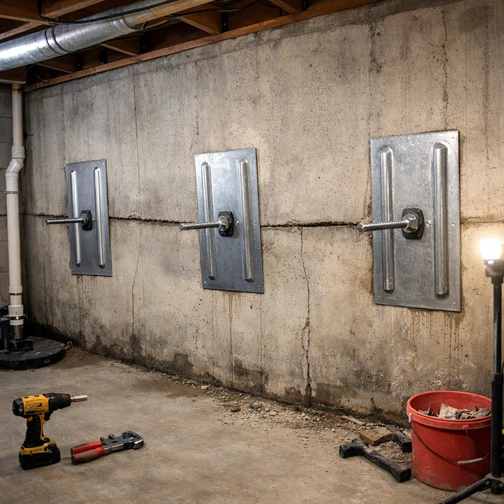
Wall stabilized with temporary repair system.
Severely bowed block wall with visible inward displacement.
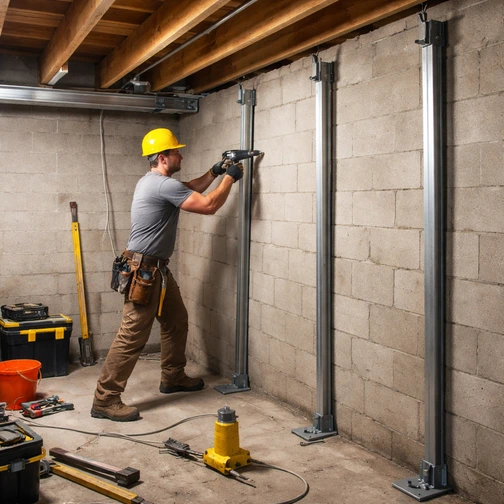
Stabilized foundation wall.
Bowed Wall Repair Methods Tailored to Your Home
Different levels of bowing and different wall types call for different repair methods. We use a range of proven solutions—including wall anchors, steel braces, and carbon fiber straps—to stabilize bowed walls and help prevent further inward movement. During your inspection, we will explain which option is the best fit for your home and why.
Wall Anchors for Moderate to Severe Bowing
Wall anchors are often used when a foundation wall has bowed several inches inward and there is usable soil space outside the foundation. Anchors connect the inside wall to stable soil further away, allowing gradual tightening that can reduce inward bowing and lock the wall in a more vertical position. This method is well suited for many block and poured concrete walls with significant lateral pressure.
Steel Braces for Interior Support
Steel I-beam braces are installed vertically along the bowed wall and anchored to the foundation and floor framing. These braces provide strong interior support that resists further inward movement and can, in some cases, allow for gradual adjustment back toward plumb. Braces are a good option when exterior excavation is limited or when the bow is moderate and the wall is still structurally sound.
Carbon Fiber Straps for Early-Stage Bowing
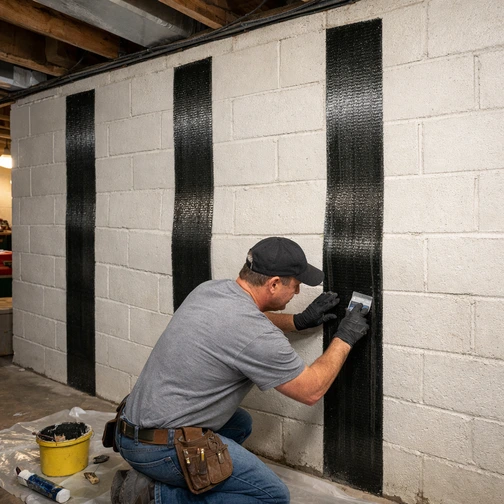
Carbon fiber straps are thin, high-strength strips bonded to the interior of the wall with specialized epoxy. They are an excellent choice when the wall has started to bow but has not moved excessively. Carbon fiber reinforcement helps resist further inward movement without taking up floor space, and it works especially well on block and poured concrete walls where the bowing is detected early.
Drainage & Pressure Relief Improvements
Because hydrostatic pressure and wet, expansive soils are major causes of bowed walls, we often recommend improving drainage as part of a comprehensive repair plan. This may include adjusting grading, extending downspouts, adding drainage systems, or other measures to reduce water buildup against the foundation. Addressing the source of the pressure helps protect your repaired wall over the long term.
Ready to Stabilize Your Bowed Foundation Walls?
Bowed walls are a serious sign that your foundation is under stress, but with the right repair approach, you can protect your home and regain peace of mind. Fort Collins Foundation Repair provides inspections, clear explanations, and proven repair solutions tailored to Northern Colorado soil and climate conditions.
Contact Us for a Free Bowed Wall Evaluation