Crawl Space Encapsulation in Fort Collins & Northern Colorado
Crawl space encapsulation is the most comprehensive and most effective approach to below-floor moisture control available for residential homes. Unlike a basic vapor barrier installation that addresses only the soil floor, or vent sealing that only reduces outdoor air infiltration, encapsulation combines all of these elements into a complete, sealed system that fundamentally transforms the crawl space from an open, uncontrolled environment into a clean, dry, semi-conditioned space that is an integrated part of your home’s building envelope. The result is a crawl space that stays dry, maintains stable humidity levels year-round, supports rather than undermines the structural integrity of the floor system above it, and contributes positively to the indoor air quality and energy efficiency of the entire home.
At Fort Collins Foundation Repair, our crawl space encapsulation service is designed specifically for the conditions that homes in Northern Colorado face. The clay-dominant soils throughout Larimer and Weld counties, the sustained soil saturation that follows spring snowmelt, the dual-peak moisture season created by summer landscape irrigation, and the significant temperature swings between seasons all demand an encapsulation system built to higher specifications and installed with greater precision than what might be adequate in a more forgiving climate. We bring the local expertise and the systematic installation approach that Northern Colorado crawl spaces require to deliver encapsulation that performs reliably through every season for years to come.
We serve homeowners throughout Fort Collins, Loveland, Greeley, Windsor, Wellington, Timnath, and the surrounding communities of Larimer and Weld counties. If your crawl space is contributing to moisture problems, air quality issues, high energy bills, or structural deterioration in your home, encapsulation addresses all of these issues in a single integrated project.
Why Crawl Space Encapsulation Is the Gold Standard for Northern Colorado Homes
For decades, the standard approach to crawl space ventilation was to install foundation vents and allow outdoor air to circulate beneath the floor. The reasoning was that moving air would carry moisture out of the crawl space and keep it dry. Building science research conducted over the past several decades has consistently demonstrated that this approach is counterproductive in most climates, and particularly in humid summer environments where warm outdoor air enters a cool crawl space and immediately deposits its moisture load onto every cool surface it contacts. The result of ventilated crawl space design in climates like Northern Colorado’s is a space that cycles through repeated wetting and drying events, each of which damages insulation, promotes mold growth, and accelerates wood deterioration more than a properly sealed and controlled environment ever would.
Encapsulation resolves this fundamental design problem by sealing the crawl space from outdoor air entirely and creating a controlled environment where humidity is actively managed rather than passively dependent on outdoor conditions. The sealed space is lined on the floor and walls with a continuous heavy-duty vapor barrier that eliminates soil moisture vapor as an active source within the crawl space. Foundation vents are sealed to prevent the outdoor moisture contribution that undermines ventilated crawl space performance. The rim joist is insulated and air-sealed to eliminate one of the largest sources of air infiltration and heat loss in a home with a crawl space. And a dehumidifier or connection to the home’s HVAC system maintains stable humidity levels within the sealed environment year-round regardless of what is happening outside.
The benefits of a properly encapsulated crawl space extend well beyond the crawl space itself. Homeowners consistently report measurable reductions in heating and cooling costs following encapsulation, as the insulated and air-sealed crawl space reduces the conditioned air losses that an open or poorly controlled crawl space allows. Indoor humidity levels and air quality typically improve significantly once the crawl space is no longer contributing moisture vapor, mold spores, and soil gases to the air circulating through the home via the stack effect. Floors above an encapsulated crawl space are warmer in winter and more structurally stable over time because the wood framing is no longer subject to the moisture cycling that causes expansion, contraction, and progressive structural degradation.
For Northern Colorado homeowners dealing with any combination of crawl space moisture, air quality, energy efficiency, or structural concerns, encapsulation addresses all of these issues at their root cause and delivers lasting results that incremental repairs and surface treatments cannot match.
Signs Your Crawl Space Is a Candidate for Encapsulation
- Persistent musty or earthy odors in the living area that cannot be eliminated by surface cleaning
- Chronic elevated indoor humidity levels even during dry outdoor conditions
- Mold growth visible on floor joists, subfloor sheathing, or structural members in the crawl space
- Fiberglass batt insulation that is damp, compressed, sagging, or has fallen from between the joists
- Soft spots, deflection, or visible sagging in floors above the crawl space
- Standing water, saturated soil, or chronic dampness in the crawl space environment
- Wood structural members showing signs of rot, darkening, or surface fungal growth
- Open or uninsulated foundation vents allowing unrestricted outdoor air entry
- Cold floors in winter despite adequate heating system operation
- Higher than expected heating and cooling costs relative to the home’s size
- Increased allergy symptoms or respiratory issues that improve when occupants are away from home
- Pest evidence including rodent activity, insect infestation, or visible insect damage to wood members
- A crawl space that has never been professionally assessed or upgraded since the home was built
Any of these conditions indicate that the crawl space environment is negatively affecting your home and your household. Encapsulation addresses all of them in a single comprehensive project.
Get a Free Crawl Space Encapsulation Estimate
Fill out the secure form below to request your free crawl space encapsulation evaluation. Our team will conduct a thorough assessment of your crawl space conditions, document everything found during the inspection, and provide a detailed recommendation for the encapsulation system and scope of work best suited to your home. There is no cost and no obligation involved in requesting your evaluation.
Our Crawl Space Encapsulation Process, Step by Step
A crawl space encapsulation project is one of the most involved and most impactful home performance upgrades available, and its success depends entirely on the thoroughness and sequence of the work performed. Encapsulation is not simply a matter of installing a vapor barrier and sealing some vents. It is a systematic transformation of the crawl space from an uncontrolled outdoor-adjacent environment to a clean, sealed, humidity-controlled space that functions as part of the home’s conditioned envelope. Every step in our process is designed to build on the steps that precede it, and skipping or shortcutting any stage compromises the performance of everything that follows.
We begin every encapsulation project with an in-person crawl space inspection that covers every square foot of the space. We measure moisture content in structural wood members, record relative humidity levels, assess the condition of all existing materials, map water entry points, and evaluate the structural integrity of the floor system. That assessment provides the complete picture that determines the scope of preparatory work required before encapsulation materials are installed, and it informs every product selection and installation decision that follows.
Our installation teams are experienced with the specific conditions present in Northern Colorado crawl spaces, including the rocky and clay-dominant soil floors that require additional care during grading and barrier installation, the older foundation constructions common in established Fort Collins neighborhoods, and the HVAC and plumbing configurations typical of homes in this region that must be carefully worked around during the encapsulation process.
Every encapsulation project concludes with a comprehensive post-installation inspection, humidity verification, and a complete walkthrough with the homeowner covering what was installed, how the system functions, and how to monitor and maintain the encapsulated space going forward.
- Comprehensive crawl space inspection and documentation: Enter and fully assess every area of the crawl space, measuring wood moisture content, recording relative humidity, mapping water entry points, assessing structural conditions, and documenting all findings with photographs before any work begins.
- Standing water and drainage remediation: Address all active water intrusion and standing water before any encapsulation materials are installed. This may include installing interior perimeter drainage channels, a sump pit, and a sump pump where water accumulation is present or chronic soil saturation is identified.
- Debris, contamination, and failed material removal: Remove all deteriorated insulation, failed vapor barrier material, organic debris, and any contaminated material from the crawl space. Clean the space thoroughly to create a controlled starting point for the encapsulation installation.
- Structural wood assessment and repair: Evaluate all floor joists, rim joists, sill plates, beams, and support posts for moisture damage, rot, and structural compromise. Sister or replace any members that have lost structural integrity. Treat surfaces showing early-stage fungal growth with appropriate treatment products before enclosure.
- Crawl space floor grading and preparation: Grade the soil floor to eliminate low spots and ponding areas, remove sharp rocks and protruding debris that could damage the barrier from below, and create a smooth, stable surface for barrier installation.
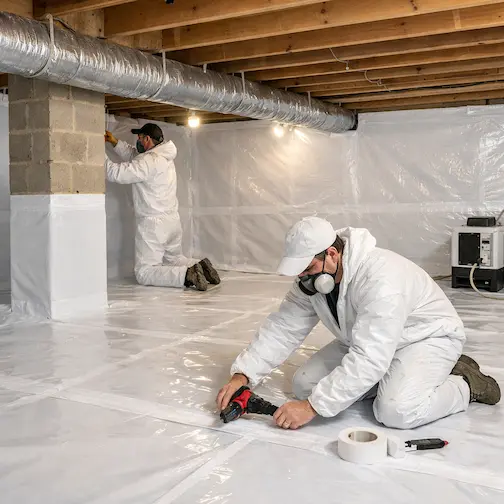
- Heavy-duty vapor barrier installation on floor and walls: Install reinforced polyethylene vapor barrier across the full crawl space floor and up all foundation walls, overlapping and sealing all seams, sealing all penetrations at pipes, posts, and piers, and mechanically fastening and sealing the perimeter wall attachment to create a fully continuous moisture control surface.
- Foundation vent sealing: Install rigid insulated vent covers or foam-sealed panels at all foundation vents to eliminate outdoor air infiltration that would introduce humidity and temperature variability into the sealed crawl space environment.
- Rim joist insulation and air sealing: Install spray foam or cut-and-cobble rigid foam insulation at the rim joist to eliminate air infiltration and heat loss at this critical thermal boundary between the conditioned home and the crawl space environment below.
- Wall insulation installation: Install rigid foam insulation panels on the interior face of the foundation walls to provide thermal resistance that keeps the crawl space environment within a stable temperature range and prevents condensation on cold wall surfaces during temperature transitions.
- Dehumidifier installation and configuration: Install a dedicated crawl space dehumidifier sized for the volume of the sealed space, connect it to a condensate drain line or sump pump for automatic water removal, and configure it to maintain relative humidity below the threshold at which mold and wood deterioration occur.
- Final inspection, humidity verification, and homeowner walkthrough: Inspect all installed components, verify humidity levels within the sealed space, document the completed installation, and walk the homeowner through the full encapsulation system with guidance on monitoring and maintaining the space going forward.
Ventilated crawl spaces introduce more moisture than they remove in Northern Colorado’s climate. Encapsulation seals the space, controls humidity actively, and delivers a dry, stable environment that protects your home’s structure, air quality, and energy performance for the long term. Fort Collins Foundation Repair installs encapsulation systems built for the specific demands of this region.
Schedule Your Free Encapsulation EvaluationCrawl Space Encapsulation Projects in Fort Collins & Northern Colorado
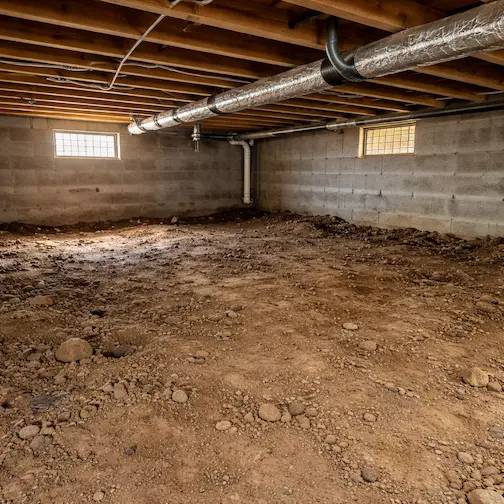
Before: Open foundation vents, exposed soil, fallen fiberglass insulation, and visible mold on floor joists throughout the crawl space.
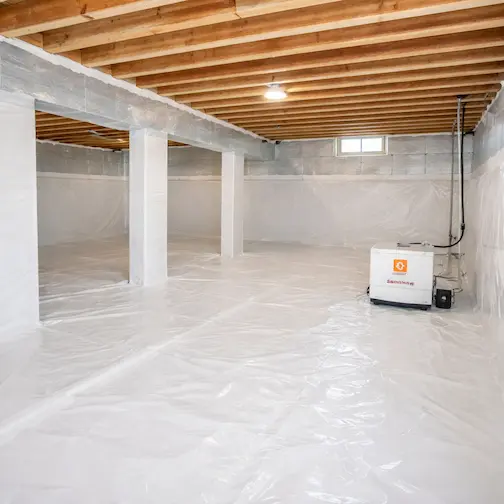
After: Complete encapsulation with sealed vapor barrier, insulated walls, sealed vents, rim joist insulation, and dehumidifier maintaining stable humidity year-round.
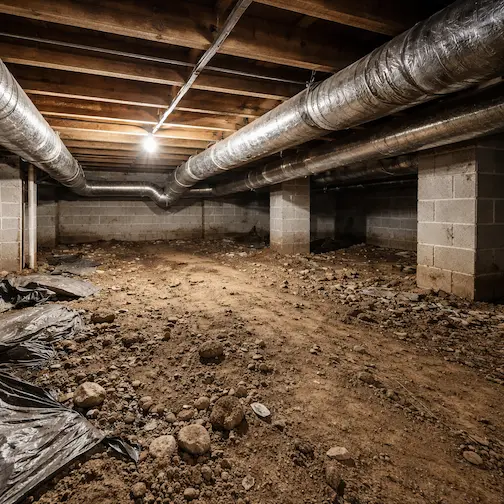
Before: Standing water, saturated soil, deteriorated structural members, and no effective moisture control in place beneath a Fort Collins home.
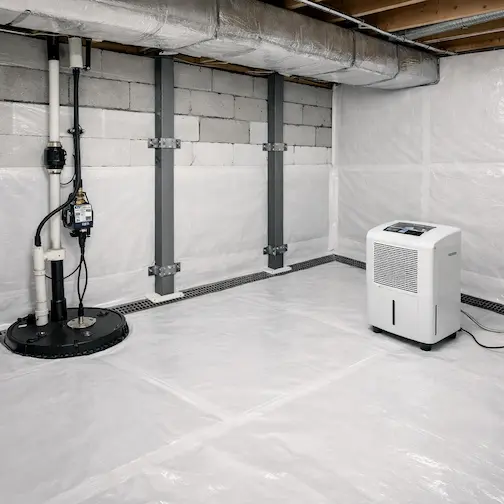
After: Complete encapsulation including drainage system, sump pump, full floor and wall vapor barrier, structural repairs, wall insulation, and active dehumidification.
Complete Crawl Space Encapsulation System Components
A complete crawl space encapsulation system is composed of multiple components that work together to seal the space, control moisture, maintain stable temperatures, and support the structural integrity of the floor system above. Each component addresses a specific aspect of crawl space performance, and the system as a whole delivers results that no single component could achieve independently. Here is a detailed look at every element of a complete encapsulation installation.
Heavy-Duty Reinforced Vapor Barrier
The vapor barrier is the foundation of the encapsulation system, covering the full crawl space floor and extending up all foundation walls to create a continuous sealed surface that eliminates soil moisture vapor as an active source within the enclosed space. We install reinforced polyethylene barrier material in the twelve to twenty mil range, with cross-laminated or woven reinforcement that provides puncture resistance appropriate for the rocky and clay-dominant soil conditions common in Northern Colorado crawl spaces. All seams are overlapped by a minimum of twelve inches and sealed with purpose-rated seam tape along their full length. Every pipe, post, pier, and penetration is individually fitted and sealed. The perimeter wall attachment is mechanically fastened and sealant-finished to prevent moisture from bypassing the barrier at the floor-wall junction. The result is a continuous, sealed moisture control surface that covers every square foot of the crawl space floor and wall below grade.
Foundation Vent Sealing
Sealing foundation vents is one of the most consequential steps in an encapsulation project. Open vents allow warm, humid outdoor air to enter the sealed crawl space during summer months, where it contacts cooler surfaces and deposits moisture through condensation. This outdoor moisture contribution can overwhelm the vapor barrier’s ability to maintain a dry environment and create mold-favorable conditions on structural surfaces even in a crawl space with a well-installed floor barrier. We install rigid insulated vent covers or cut rigid foam panels sealed with spray foam at every foundation vent opening, providing both air sealing and thermal resistance at each vent location. The result is a sealed perimeter that prevents outdoor air infiltration and allows the crawl space environment to be controlled by the dehumidifier or HVAC connection rather than by outdoor conditions.
Rim Joist Insulation and Air Sealing
The rim joist runs along the top of the foundation wall where the floor framing begins and represents one of the largest sources of air infiltration and heat loss in homes with crawl spaces. In a cold Northern Colorado winter, an uninsulated rim joist allows conditioned air to escape the home continuously while drawing cold outside air inward, contributing to cold floors, elevated heating costs, and temperature instability in rooms above the crawl space. We address the rim joist during encapsulation with either closed-cell spray foam applied directly to the interior rim joist surface, or precisely cut rigid foam panels fitted tightly into each bay and sealed at all edges with foam sealant. Both approaches create an effective thermal and air barrier at the rim joist that dramatically reduces heat loss and air infiltration at this location. The rim joist treatment is one of the highest-return energy efficiency measures included in a complete encapsulation project.
Foundation Wall Insulation
In an encapsulated crawl space, insulating the foundation walls rather than the floor above is the more effective thermal strategy because it includes the crawl space volume within the home’s conditioned envelope rather than trying to insulate the floor assembly above a potentially damp and temperature-variable space. Foundation wall insulation in an encapsulated crawl space prevents the cold wall surfaces from acting as condensation targets during temperature transitions, keeps the crawl space air temperature within a range that reduces mold risk, and contributes to the overall thermal performance of the home’s below-grade envelope. We install rigid foam panels on the interior face of the foundation walls at appropriate thickness to deliver the R-value required for the Northern Colorado climate zone, integrated with the vapor barrier installation to create a continuous thermal and moisture control system from floor to rim joist.
Dedicated Crawl Space Dehumidifier
The dehumidifier is the active humidity management component of the encapsulation system. It continuously monitors relative humidity within the sealed crawl space and operates automatically to maintain levels below fifty-five percent relative humidity, the threshold above which mold colonization and wood moisture absorption accelerate significantly. Crawl space dehumidifiers are purpose-designed for the below-floor environment and are significantly more capable in this application than portable consumer units not designed for below-grade installation. Units are sized based on the volume of the sealed space and the expected moisture load from residual soil vapor and any incidental infiltration. Automatic drainage via a condensate line routed to a floor drain or sump pump eliminates the need for manual emptying and allows the unit to operate continuously without intervention. In Northern Colorado’s climate, a properly sized crawl space dehumidifier is particularly valuable during the spring snowmelt season and summer months when ambient moisture conditions are at their peak.
Interior Drainage System Integration
In crawl spaces where standing water, active water intrusion through foundation walls, or chronic soil saturation is present, encapsulation must be preceded by or combined with an interior drainage solution. Installing a vapor barrier over a wet crawl space floor without addressing the water source traps water beneath the barrier, creates conditions for accelerated structural deterioration, and defeats the purpose of the encapsulation entirely. Where drainage is required, we install perimeter drainage channels, a properly sized sump pit, and a primary sump pump with battery backup before encapsulation materials are installed, ensuring that the sealed crawl space environment is built on a foundation of effective water management. The drainage system and encapsulation components are integrated at the perimeter wall junction to create a seamless transition between the drainage pathway and the vapor barrier surface.
Structural Wood Repair and Treatment
Encapsulating a crawl space that contains structurally compromised wood members without addressing the damage first does not halt the deterioration. It encloses it. Floor joists, rim joists, sill plates, and support posts that have experienced moisture damage must be evaluated and repaired before the space is sealed. We sister damaged joists with new lumber fastened alongside the compromised members to restore combined load-bearing capacity. Sill plates with rot at the foundation wall connection are replaced with pressure-treated lumber. Support posts compromised at their base are replaced with properly sized treated members or adjustable steel posts set on new or existing footings. Wood surfaces showing early-stage fungal growth but not yet structurally compromised are treated with appropriate borate-based wood preservative products before enclosure to prevent continued biological activity within the sealed environment.
Humidity Monitor and High-Water Alarm
A properly encapsulated crawl space should be monitored periodically to confirm that humidity levels remain within the target range and that the drainage system and dehumidifier are functioning as intended. A dedicated humidity monitor installed in the sealed space provides a continuous readout of relative humidity conditions, allowing the homeowner or a service technician to verify system performance at a glance without entering the crawl space. Where a sump pump is part of the installation, a high-water alarm in the sump pit provides an early warning signal if water is accumulating faster than the pump can remove it, which may indicate a pump malfunction, a blocked discharge line, or an unusually high water inflow event that warrants investigation. These monitoring components add a layer of ongoing visibility into the crawl space environment that helps catch and address issues before they develop into significant problems.
Why Encapsulation Specifications Must Match Northern Colorado Conditions
The Failure of Vented Crawl Spaces in This Climate
Northern Colorado’s climate is more demanding for vented crawl spaces than many homeowners realize. During summer months, warm outdoor air with elevated relative humidity enters crawl space vents and contacts the cooler soil, structural wood, and concrete surfaces inside, where it deposits moisture through condensation. This condensation occurs even during periods when outdoor humidity levels are not exceptionally high by absolute measure, because the temperature differential between outdoor air and the cool crawl space interior is sufficient to drive condensation on every surface the air contacts. Over a summer season, this repeated condensation cycle can raise wood moisture content to levels that support mold and fungal growth even in a crawl space that appears dry during winter inspections. Encapsulation eliminates this outdoor air contribution entirely and breaks the condensation cycle that vented crawl space design perpetuates.
Energy Performance Gains Are Significant in Cold Winters
Fort Collins winters are cold, and the energy losses through an uninsulated, unencapsulated crawl space are substantial. Cold outdoor air infiltrating through foundation vents and an uninsulated rim joist creates a cold zone beneath the floor that the home’s heating system must continuously compensate for. Floors above the crawl space remain cold despite adequate thermostat settings because the heat loss through the floor assembly is ongoing. Encapsulation addresses this energy performance problem by sealing air infiltration pathways, insulating the foundation walls and rim joist, and converting the crawl space from a cold outdoor-adjacent zone to a semi-conditioned buffer space. Homeowners in the Fort Collins area who have encapsulated their crawl spaces consistently report warmer floors in winter, more even room-to-room temperature distribution, and meaningful reductions in monthly heating costs, particularly in homes with older construction and minimal existing insulation at the crawl space perimeter.
Long-Term Structural Protection in a High-Moisture Environment
The structural wood framing in a crawl space exposed to Northern Colorado’s moisture conditions over many years without adequate protection will progressively deteriorate in ways that are expensive to correct once they become significant. Wood begins absorbing moisture and swelling at relative humidity levels above approximately seventy percent. Fungal decay becomes active above approximately twenty percent wood moisture content. In a vented crawl space during a Northern Colorado summer, both of these thresholds can be regularly exceeded without any visible sign from the living space above. Encapsulation maintains crawl space relative humidity well below the levels at which moisture absorption and fungal activity accelerate, protecting the floor framing from the progressive deterioration that higher humidity levels drive over years and decades of exposure. The structural protection that encapsulation provides is one of the most significant long-term value benefits of the investment, preventing the expensive joist sistering, beam replacement, and sill plate repair that becomes necessary when structural wood has been exposed to chronically elevated humidity without protection.
Transform Your Crawl Space and Protect Your Entire Home
A properly encapsulated crawl space is not just a drier crawl space. It is a healthier home, a more energy-efficient home, a structurally stronger home, and a more comfortable home for everyone who lives in it. The conditions beneath your floor affect everything above it, and addressing those conditions with a complete, properly installed encapsulation system is one of the most impactful whole-home investments available to Northern Colorado homeowners. Fort Collins Foundation Repair provides thorough encapsulation assessments and complete system installations built for the specific demands of this climate and these soils. The evaluation is free, there is no obligation to proceed, and the information you receive gives you a complete and honest picture of your crawl space’s current condition and what encapsulation can do for your home. Fill out the form above and let our team get started.
Contact Us for Your Free Encapsulation Evaluation