Basement Waterproofing in Fort Collins & Northern Colorado
A wet basement is not simply an inconvenience. It is an active threat to your home’s structural integrity, your indoor air quality, and the long-term value of your property. Water that enters a basement, whether as seepage through wall cracks, infiltration at the floor-wall joint, condensation on cold surfaces, or active flooding during high water table periods, introduces moisture into a space that was designed to stay dry. Once moisture is present consistently, the consequences compound. Foundation walls are weakened by freeze-thaw expansion of water in cracks. Structural wood deteriorates as humidity levels remain elevated. Mold colonizes every organic surface it contacts. The finished space becomes unusable, and the unfinished space becomes a source of air quality problems, energy inefficiency, and accelerating structural damage that does not remain contained below the floor.
At Fort Collins Foundation Repair, our basement waterproofing service addresses water intrusion at its source with a comprehensive, layered approach that combines interior drainage systems, wall waterproofing, sump pump installation, and where warranted, exterior drainage improvements into a coordinated solution designed for the specific moisture conditions present in your basement. We do not apply a surface coating and call it waterproofing. We install a complete water management system that intercepts water before it can cause damage, channels it to a collection point, and removes it from the building efficiently and reliably.
We serve homeowners throughout Fort Collins, Loveland, Greeley, Windsor, Wellington, Timnath, and the surrounding communities of Larimer and Weld counties. If your basement has water problems of any kind, from occasional seepage to chronic flooding, our team will assess the conditions thoroughly and provide a solution built for what your specific situation actually requires.
Why Basement Water Problems Demand a Comprehensive Solution in Northern Colorado
Homeowners dealing with basement moisture often look for a quick, low-cost fix: a coat of waterproofing paint on the interior wall, a tube of hydraulic cement pressed into the worst crack, a dehumidifier running in the corner. These measures can reduce visible symptoms temporarily, but they address the surface expression of a water management problem rather than the problem itself. The water that is entering your basement is doing so because the soil conditions outside your foundation walls contain more moisture than your foundation was designed to handle without a proper drainage and waterproofing system in place. Until that moisture load is intercepted, redirected, and managed actively, it will continue finding its way through every available pathway, including the pathways you have temporarily sealed.
Northern Colorado’s geology makes this problem particularly acute. The expansive clay soils throughout Larimer and Weld counties retain water for extended periods after rain events and snowmelt, maintaining elevated soil moisture levels against foundation walls long after the surface appears dry. During spring snowmelt, which can saturate the ground for weeks at a time across the Front Range, the hydrostatic pressure against basement walls can reach levels that force water through the smallest crack or joint in the foundation. Summer thunderstorms deliver high-intensity rainfall in short periods that saturates the surface faster than it can drain, creating temporary but severe hydrostatic pressure events that overwhelm the drainage capacity of sites without adequate water management systems. And the dual-season moisture pattern created by spring snowmelt followed by summer landscape irrigation means that soil moisture levels near foundations in this region are elevated for a greater portion of the year than they are in many other climates.
A properly designed basement waterproofing system addresses this moisture load comprehensively. It intercepts water that is moving through the foundation wall or entering at the floor-wall joint before it can spread across the basement floor. It channels intercepted water to a collection point. It removes collected water from the building reliably through a properly sized sump pump with battery backup for protection during power outages. And it includes the wall management systems needed to protect the foundation structure from the hydrostatic pressure that the exterior moisture load generates. The result is a basement that stays dry through every seasonal moisture event that Northern Colorado’s climate delivers, regardless of the soil conditions outside.
Basement waterproofing is also one of the most impactful investments available for improving the livable square footage, energy efficiency, and resale value of a home. A dry, usable basement is a fundamentally different asset than a wet, unusable one, and the waterproofing investment that creates that transformation consistently returns significant value in the form of usable space, reduced structural maintenance costs, and increased property value.
Signs Your Basement Needs Professional Waterproofing
- Standing water on the basement floor following rain events, snowmelt, or periods of high soil moisture
- Seepage through cracks in the foundation walls or at the floor-wall joint
- Efflorescence, the white chalky mineral deposit left behind when water evaporates from concrete, on basement walls
- Tide marks or staining on basement walls that indicate the historical level of water intrusion
- Persistent musty or earthy odors in the basement that return after cleaning
- Visible mold growth on walls, floor, stored items, or framing in the basement space
- Paint or waterproofing coating that is peeling, bubbling, or flaking off interior basement walls
- Damp or wet insulation on basement walls or rim joist areas
- Rust staining on the basement floor from metal items that have been exposed to chronic moisture
- Basement walls that appear damp to the touch even during dry outdoor conditions
- Elevated indoor humidity levels throughout the home that are difficult to control
- Wood framing in the basement showing signs of moisture damage, staining, or early rot
- A sump pump that runs very frequently or that has failed during a high water event, resulting in basement flooding
Any of these conditions indicates that water is entering or accumulating in the basement space in quantities that a professional waterproofing system needs to address. Early intervention consistently reduces the scope and cost of both the waterproofing work and any associated structural repairs.
Get a Free Basement Waterproofing Assessment
Fill out the secure form below to request your free basement waterproofing assessment. Our team will conduct a thorough evaluation of your basement’s water intrusion points, drainage conditions, wall and floor status, and the site factors contributing to your moisture problem. We document all findings and provide a detailed recommendation for the waterproofing system and scope of work best suited to your home’s specific conditions. There is no cost and no obligation involved.
Our Basement Waterproofing Process, Step by Step
Effective basement waterproofing is a systematic installation process, not a single product or a quick coating application. A properly waterproofed basement is the result of a coordinated set of components installed in the correct sequence, each one building on the work that preceded it to create a complete water management system that functions reliably under the full range of moisture conditions the home will encounter throughout its life. Every component in the system serves a specific function, and the failure or absence of any one component compromises the performance of the entire installation.
Our process begins with a detailed on-site assessment that documents every water entry point, every area of wall or floor damage, the site drainage conditions, and the soil and groundwater factors driving the moisture problem. This assessment is not a sales presentation. It is the diagnostic step that determines what the waterproofing system needs to accomplish and what components are required to accomplish it in this specific basement with its specific conditions. Systems that are designed based on an accurate assessment of actual conditions perform fundamentally better than systems specified without one.
Our installation teams are experienced with the basement construction types, foundation wall materials, and drainage conditions common to homes throughout the Fort Collins area. Poured concrete walls, concrete block walls, and stone or rubble foundations each present different waterproofing challenges and require different installation approaches. We bring the specific expertise each construction type demands.
Every waterproofing project concludes with a complete system inspection, operational verification of all drainage and pump components, and a thorough homeowner walkthrough covering how the system works, what to monitor, and how to maintain it for long-term performance.
- Comprehensive basement assessment and water entry mapping: Conduct a detailed inspection of the full basement perimeter, documenting all active and historic water entry points, wall crack locations and patterns, floor-wall joint conditions, efflorescence deposits, staining, and tide marks. Record ambient humidity levels. Evaluate exterior site drainage conditions and identify contributing factors outside the foundation. This assessment determines the scope and component requirements of the waterproofing system.
- Content protection and work area preparation: Move stored items and any furnishings away from the work perimeter. Protect surfaces and contents that cannot be relocated. Mark utility line locations and assess any penetrations through the basement floor or walls that must be accounted for in the drainage system layout. Establish the perimeter trench line and sump pit location based on the drainage system design.
- Perimeter trench excavation: Saw-cut and break out the concrete floor along the full interior perimeter of the basement at the foundation wall base. Excavate the trench to the depth of the foundation footing to expose the bottom of the wall and allow drainage channel installation below the floor slab level. Remove all excavated concrete and soil from the work area.
- Foundation wall base preparation: Clean the exposed foundation wall base and footing area of loose material and debris. Assess the wall base condition for any structural concerns that need to be addressed before the drainage system is installed. Where wall cracks extend to the base of the wall, document their full extent and address structural concerns as required before proceeding.
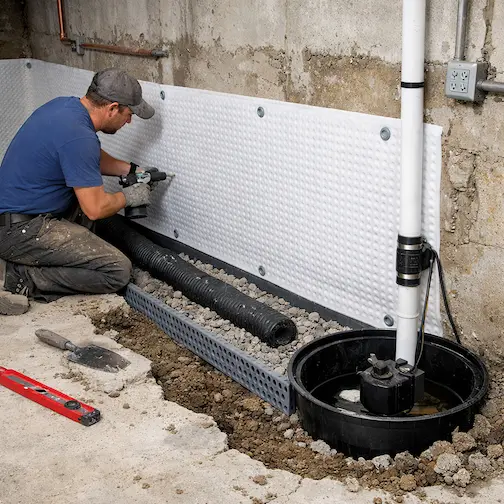
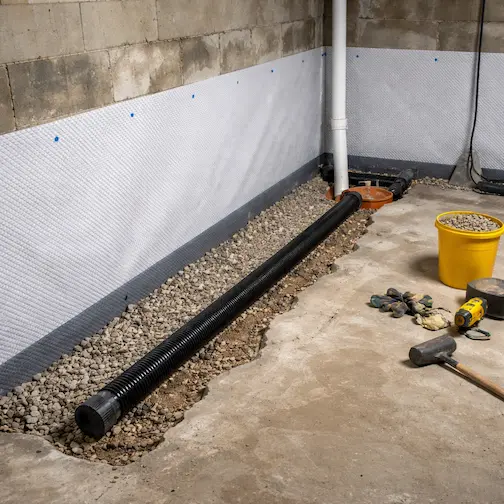
- Interior perimeter drainage channel installation: Install the interior perimeter drainage pipe or channel system along the base of the foundation wall within the excavated trench. The drainage channel is positioned and sloped to direct water reliably toward the sump pit location. Drainage board or wall membrane is installed against the foundation wall base above the channel to intercept water weeping through the wall and direct it into the drainage system rather than onto the basement floor.
- Sump pit excavation and liner installation: Excavate the sump pit at the designated collection point to the required depth and diameter. Install the sump pit liner with a perforated base and sides that allow groundwater to enter the pit from the surrounding soil as well as receiving water from the drainage channel system. Ensure the pit liner is set level and at the correct elevation relative to the drainage channel inflow.
- Primary sump pump and battery backup installation: Install the primary submersible sump pump within the pit with the float switch set at the appropriate activation level. Install a battery backup pump system that will continue removing water during power outages, which are most common precisely during the severe storm events when basement flooding risk is highest. Route the discharge line to daylight at an appropriate exit point well away from the foundation perimeter.
- Wall waterproofing membrane installation: Install interior drainage board or dimple mat membrane against the full height of the basement walls throughout the waterproofed perimeter. The membrane creates a drainage plane against the wall surface that intercepts water weeping through the wall at any point and directs it downward into the perimeter drainage channel rather than allowing it to migrate across the basement floor. At the top of the wall, seal the membrane to prevent water from bypassing it at the rim joist level.
- Crack injection and wall crack repair: Inject all active wall cracks with polyurethane or epoxy injection material to seal water entry pathways through the wall itself. Polyurethane injection is used for active wet cracks where flexibility is needed to accommodate minor wall movement. Epoxy injection is used for structural crack repair where rigid bonding and strength restoration are the primary objectives. All injected cracks are documented with location and material used for the project record.
- Concrete floor reinstatement over drainage system: Place and finish new concrete over the perimeter drainage trench, restoring the basement floor surface to a clean, level condition. The new concrete is finished flush with the existing floor and integrates cleanly with the drainage system components below. Allow appropriate cure time before the area is returned to use.
- System testing, final inspection, and homeowner walkthrough: Test all drainage system components, verify sump pump operation and float switch function, confirm battery backup system status, and inspect all installed components for completeness and quality. Walk the homeowner through the full waterproofing system, explain how each component functions, what normal operation looks like, and what maintenance is recommended to keep the system performing reliably for the long term.
A wet basement in Northern Colorado is not a cosmetic problem and it is not one that surface treatments will solve. The clay soils, snowmelt saturation, and seasonal moisture patterns in this region demand a complete, properly installed waterproofing system. Fort Collins Foundation Repair designs and installs basement waterproofing systems built for the specific conditions your home faces. The assessment is free and there is no obligation to proceed.
Schedule Your Free Basement Waterproofing AssessmentBasement Waterproofing Projects Across Fort Collins & Northern Colorado
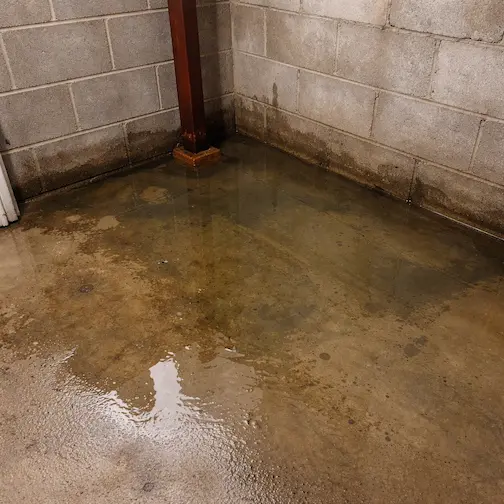
Chronic seepage at the floor-wall joint, heavy efflorescence deposits across multiple wall sections, and recurring standing water in the low corner of the basement following spring snowmelt events.
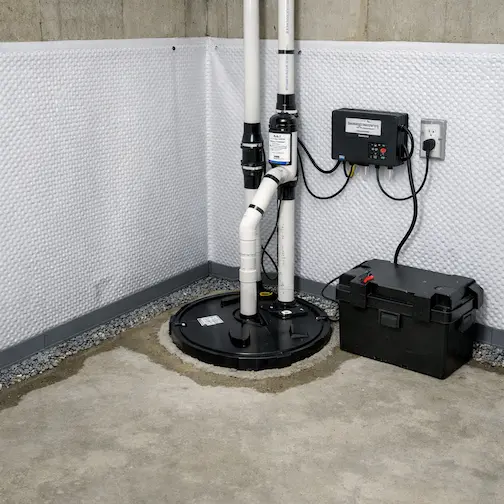
Complete interior perimeter drainage system, wall membrane, sump pump with battery backup installed. Basement remained dry through the following spring snowmelt season.
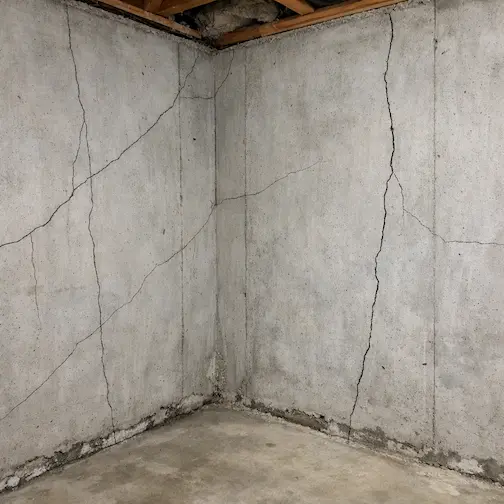
Multiple active seepage cracks in a poured concrete basement wall, with water staining extending across the floor and mold growth on stored items throughout the space.
Wall cracks sealed with polyurethane injection, full interior drainage system and wall membrane installed, and sump system operational. Basement converted to dry, usable storage space.
Basement Waterproofing System Components
A complete basement waterproofing system is composed of multiple coordinated components, each performing a specific function in the overall water management strategy. Understanding what each component does and why it is part of the system helps homeowners evaluate waterproofing proposals and make informed decisions about the scope of work their basement situation requires. Here is a detailed look at every element of a comprehensive basement waterproofing installation.
Interior Perimeter Drainage System
The interior perimeter drainage system is the central component of a comprehensive basement waterproofing installation. It consists of a drainage channel or perforated pipe installed in a trench excavated along the interior base of the foundation walls, below the level of the basement floor slab. Rather than attempting to prevent water from reaching the interior of the foundation, which is difficult to achieve permanently with interior surface treatments, the perimeter drainage system intercepts water that enters through the base of the wall or at the floor-wall joint and channels it reliably to the sump pit for removal. The system is installed at the base of the wall rather than simply along the floor surface so that it captures water before it can spread across the basement floor and cause damage. Properly installed with adequate slope toward the sump pit and protected from soil migration that could clog the drainage channel over time, an interior perimeter drainage system provides reliable water management through the full range of seasonal moisture events that Northern Colorado basements experience.
Interior Wall Drainage Membrane
Interior drainage membrane, also described as dimple mat or drainage board, is installed against the interior face of the basement walls from the floor level up to a height that covers the below-grade portion of the wall. The membrane creates a continuous air gap between the wall surface and any finish material or the open basement space, within which water that seeps through the wall at any point above the floor can travel downward by gravity rather than spreading horizontally across the wall surface or collecting behind finish materials. At the bottom, the membrane directs this wall drainage into the perimeter drainage channel. The membrane system extends the effective water collection zone of the drainage system from the floor-wall joint up the full height of the below-grade wall, ensuring that seepage at any location along the wall is captured and managed rather than allowed to migrate onto the floor. It also creates a drainage plane that prevents hydrostatic pressure from building against interior wall finishes, protecting drywall, insulation, and other finish materials from moisture damage.
Sump Pit and Liner
The sump pit is the collection point of the interior waterproofing system, receiving water from the perimeter drainage channel and from groundwater that enters through the pit’s perforated liner from the surrounding soil. Pit size and depth are determined by the volume of water the system is expected to collect during peak inflow periods and by the capacity of the pump installed within it. The liner is perforated to allow groundwater that is not captured by the drainage channel to enter the pit directly from the surrounding soil rather than finding alternate entry paths through the floor slab. The pit cover seals the opening between pump cycles to prevent humidity, soil gases, and debris from entering the basement air from the pit interior. A properly sized, correctly located sump pit with an appropriate liner is the foundation on which the entire drainage and pump system depends, and its specification deserves the same care as every other component in the waterproofing installation.
Primary Sump Pump and Discharge Line
The primary sump pump is the active mechanical component that removes water from the sump pit and discharges it outside the home at a location well removed from the foundation perimeter. Pump selection is based on the anticipated inflow volume, the vertical and horizontal distance water must travel through the discharge line, and the reliability requirements of the application. In Northern Colorado basements where spring snowmelt can produce sustained high-volume inflow periods lasting days or weeks, pump sizing is particularly important because an undersized pump will struggle to keep pace with inflow during peak periods and the pit will overflow onto the basement floor despite the drainage system functioning as intended. The discharge line must be routed to a location where discharged water will drain away from the home rather than cycling back toward the foundation, and it must be protected against freezing at its exterior terminus during cold weather conditions.
Battery Backup Sump Pump System
The conditions that produce the highest basement flooding risk are precisely the conditions most likely to cause power outages. Severe thunderstorms, which are the primary cause of acute flooding in Fort Collins area basements during summer months, frequently knock out power to neighborhoods at the same time that they are delivering the highest rainfall volumes. A primary sump pump that loses power at the moment of greatest need provides no protection at all. A battery backup sump pump system operates independently of the home’s electrical supply, drawing from a dedicated battery that is kept charged during normal power conditions and activates automatically when the primary pump fails or when power is interrupted. Battery backup systems also provide protection when the primary pump fails mechanically, which can occur without warning at any time. For Northern Colorado basements where the consequences of a single flooding event can include significant damage to stored belongings, finished space, and structural components, battery backup is not an optional upgrade. It is a fundamental component of a complete waterproofing installation.
Wall Crack Injection
Foundation wall cracks that are actively admitting water represent a direct pathway that should be sealed as part of a comprehensive waterproofing installation, even where a drainage system is installed to manage seepage. Crack injection fills the full depth of a crack through the wall with material that bonds to the concrete and seals the pathway against future water entry. Polyurethane foam injection is used for cracks that are actively wet at the time of injection, as the material reacts with moisture during curing to expand and fill the crack volume even in the presence of water. Epoxy injection is used for dry cracks where structural restoration is a goal in addition to water sealing, as cured epoxy has tensile strength comparable to the surrounding concrete and effectively welds the crack faces back together. Choosing the correct injection material for each crack based on its moisture condition and structural role is an important element of a technically sound waterproofing installation.
High-Water Alarm and Monitoring
A high-water alarm installed in the sump pit provides an early warning if water is rising toward the rim of the pit despite the pump operating, which may indicate that inflow is exceeding pump capacity, that the pump float switch has failed to activate properly, or that the discharge line has become blocked or frozen. The alarm gives the homeowner or occupant an opportunity to respond before the pit overflows onto the basement floor. Modern alarm systems can also send notifications to a smartphone, which is particularly valuable for homeowners who travel or who may not hear an audible alarm during overnight events. In a waterproofing installation that represents a significant investment in protecting the home from water damage, a high-water alarm is a low-cost monitoring component that provides a meaningful additional layer of protection and confidence.
Rim Joist Sealing and Insulation
The rim joist at the top of the basement wall is one of the largest sources of both air infiltration and condensation-driven moisture in a basement space. Warm interior air that contacts the cold rim joist surface during winter deposits moisture through condensation, contributing to the elevated basement humidity that promotes mold growth and wood deterioration independently of any water intrusion through the foundation walls or floor. Sealing and insulating the rim joist with closed-cell spray foam or rigid foam cut-and-cobble panels eliminates this condensation pathway, reduces air infiltration at one of the most significant thermal boundaries in the basement, and contributes meaningfully to both the moisture management performance and the energy efficiency of the space. Including rim joist treatment as part of a basement waterproofing project addresses a moisture source that a drainage-only system cannot reach, and it rounds out the waterproofing installation into a complete moisture management solution for the full basement envelope.
Why Northern Colorado Basements Face a Demanding Waterproofing Challenge
Spring Snowmelt Creates Weeks of Sustained Hydrostatic Pressure
The spring snowmelt season on the Front Range is not a single event. It is an extended period, often lasting several weeks, during which accumulated snowpack releases water into the soil faster than it can drain or evaporate. During this period, the water table rises significantly across the region and soil moisture levels adjacent to foundations reach their annual maximum. The hydrostatic pressure that this sustained soil saturation generates against basement walls is far greater and longer-lasting than what a single rainstorm produces, and it is precisely the type of loading that exposes the inadequacy of surface-applied waterproofing coatings and temporary crack repairs. A complete interior drainage and waterproofing system is designed to manage this sustained pressure load for the full duration of the snowmelt season, not just to handle the episodic water intrusion of short weather events.
Clay Soils Hold Water Against Foundations Long After Rain Events
In regions with sandy or gravelly soils, water moves quickly through the ground and drains away from foundations relatively rapidly after rain events. In Northern Colorado’s clay-dominant soils, the opposite is true. Clay holds water tenaciously, draining slowly and maintaining elevated moisture levels adjacent to foundation walls for days and sometimes weeks after the precipitating event has passed. This means that a basement in a clay soil environment is under hydrostatic pressure not just during and immediately after rain events, but for an extended period following them. The cumulative effect of this sustained pressure over years is progressive crack widening, joint opening, and wall movement that worsens with each wet season. Waterproofing systems designed for this environment must be capable of managing sustained pressure loads rather than just the transient loads that less moisture-retentive soils generate.
Interior Waterproofing Outperforms Exterior in Most Established Homes
Exterior waterproofing, which involves excavating the full perimeter of the foundation down to the footing to apply a membrane to the outside of the wall, is the approach that prevents water from ever reaching the interior of the foundation. For new construction where the foundation is accessible before backfilling, exterior waterproofing is the preferred method. For established homes where the foundation is surrounded by landscaping, hardscape, driveways, and mature plantings, full exterior excavation is enormously disruptive and expensive, often requiring the removal and replacement of significant landscaping and hardscape features in addition to the waterproofing work itself. Interior waterproofing systems, which intercept and manage water that has already entered or is entering the foundation from inside, deliver reliable basement water management for established homes at a fraction of the disruption and cost of full exterior excavation, and they perform effectively through the full range of moisture events Northern Colorado basements experience when properly designed and installed.
A Dry Basement Starts With the Right System, Properly Installed
Basement water problems in Northern Colorado will not resolve on their own, and surface treatments will not keep pace with the hydrostatic pressure and sustained soil moisture that clay soils and spring snowmelt generate against your foundation year after year. Fort Collins Foundation Repair installs complete, properly designed basement waterproofing systems built for the specific conditions your home faces, with every component selected and installed to work together as an integrated water management solution. Our assessment is thorough, our recommendations are honest, and our installations are built to perform reliably through every season this region delivers. The assessment is free and there is no obligation to proceed until you are confident the solution is right for your home. Fill out the form above and let our team evaluate your basement today.
Contact Us for Your Free Basement Waterproofing Assessment