Basement Wall Systems in Fort Collins & Northern Colorado
Wet, cracked, or bowing basement walls are more than a cosmetic inconvenience. They are a direct threat to your home’s structural integrity, indoor air quality, and long-term value. At Fort Collins Foundation Repair, we install comprehensive basement wall systems that address moisture intrusion, structural deterioration, and energy loss in a single, integrated solution built to perform through Northern Colorado’s demanding climate cycles.
Our basement wall systems combine professional-grade waterproofing membranes, perimeter drainage channels, insulated wall panels, and structural reinforcement components to deliver lasting protection against the hydrostatic pressure, freeze-thaw stress, and expansive soil movement that basement walls in the Fort Collins area face year after year. Whether your walls are actively leaking, showing signs of inward bowing, or simply allowing moisture to seep through over time, we have the right system to stop the damage and restore your basement to a dry, stable, and usable condition.
We serve homeowners throughout Fort Collins, Loveland, Greeley, Windsor, Wellington, Timnath, and the surrounding communities of Larimer and Weld counties. If your basement walls are showing any signs of stress or water intrusion, the time to act is before the problem compounds into something far more costly to correct.
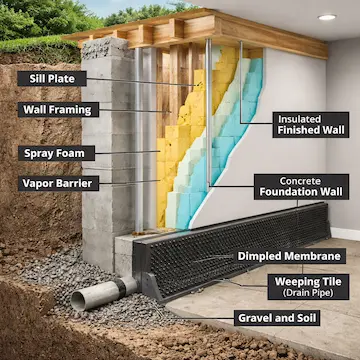
Why Basement Wall Systems Are Essential in Northern Colorado
Fort Collins and the broader Northern Colorado region present a uniquely challenging environment for basement walls. The combination of heavy spring snowmelt, clay-heavy soils that expand and contract with moisture changes, and repeated freeze-thaw cycles throughout winter creates relentless pressure against below-grade walls that were never designed to handle these stresses indefinitely without a proper protective system in place.
When water saturates the soil surrounding your foundation, it exerts hydrostatic pressure against the wall from the outside. Over time, this pressure causes concrete and block walls to crack, bow inward, and eventually allow water to penetrate into the living space below. Even walls that are not yet visibly damaged may be allowing moisture vapor to pass through, elevating indoor humidity levels, encouraging mold growth, and degrading the air quality throughout your entire home.
Surface sealers and paint-on waterproofing products address only the symptom, not the cause. They cannot withstand sustained hydrostatic pressure and typically fail within a few seasons. A complete basement wall system installed by Fort Collins Foundation Repair addresses water at its source, manages it through a controlled drainage pathway, and reinforces the wall structure itself so that your basement remains dry and stable regardless of what is happening in the soil outside.
The result is a basement that can be finished, used, and enjoyed without the constant concern that the next heavy rain or spring thaw will bring water back through the walls.
Warning Signs Your Basement Walls Need Professional Attention
- Visible cracks running horizontally, vertically, or diagonally across the wall surface
- Walls that appear to be bowing or leaning inward at any point
- Water seeping through cracks, joints, or the wall face during or after rain events
- White chalky efflorescence deposits forming on the wall surface
- Mold, mildew, or a persistent musty odor in the basement
- Peeling paint or bubbling on previously painted walls
- Rust staining near wall ties or reinforcement points
- Spalling or flaking concrete and crumbling mortar joints in block walls
- Elevated humidity levels causing condensation on surfaces or damage to stored items
- Stair-step cracking patterns in concrete block walls indicating settlement or lateral movement
Any of these signs indicate that water or structural forces are actively working against your basement walls. Early intervention with a complete wall system is far less costly than addressing advanced structural failure or extensive water damage.
Get a Free Basement Wall System Estimate
Fill out the secure form below to request your free basement wall evaluation. Our team will assess your walls, identify the source of any moisture or structural issues, and recommend the most effective wall system solution for your home and your budget. There is no cost and no obligation involved in requesting an evaluation.
Our Basement Wall System Installation Process
A properly installed basement wall system requires careful preparation, precise component placement, and thorough testing to perform the way it should under real-world conditions. Our installation process is designed to address every aspect of your basement wall’s moisture and structural challenges in the correct sequence, ensuring that each component of the system works together as an integrated whole rather than a collection of individual fixes.
Every installation begins with a detailed on-site evaluation to understand the specific water sources, soil conditions, and structural stresses affecting your walls. That assessment informs every decision that follows, from the waterproofing approach to the type and placement of structural reinforcement. We do not apply a generic solution to every basement. We design the system around what your specific walls need.
Our installation teams work efficiently to minimize disruption to your home while maintaining the standard of workmanship that a permanent solution requires. When the job is complete, we verify the system’s performance with a thorough flood test before we consider the installation finished.
- Comprehensive wall assessment: Identify all water entry points, active cracks, bowing locations, soil pressure indicators, and drainage deficiencies affecting your basement walls.
- Surface preparation: Remove deteriorated parging, loose concrete, and failed previous repairs. Clean wall surfaces to ensure proper adhesion of waterproofing materials.
- Crack and joint sealing: Fill active cracks and cold joints with hydraulic cement and appropriate sealants to stop immediate water intrusion before membrane installation.
- Waterproofing membrane installation: Apply heavy-duty dimpled drainage membrane from footing to rim joist, creating a continuous water management surface across the entire wall.
- Perimeter drainage channel installation: Install baseboard drainage channel at the floor-wall joint to capture water directed downward by the membrane and route it to the sump system.
- Structural reinforcement (where indicated): Install carbon fiber straps, wall anchors, or steel I-beam supports at bowing or cracked locations to stabilize and reinforce compromised wall sections.
- Insulated panel installation: Fit rigid foam insulated wall panels over the waterproofing system to provide thermal performance, a finished appearance, and a stud-ready surface for future finishing work.
- System testing and walkthrough: Conduct flood testing to verify complete waterproofing performance, inspect all components, and walk you through the completed system before we leave your property.
Temporary patches and surface sealers cannot stop sustained hydrostatic pressure. Our complete basement wall systems provide the permanent, multi-layer protection your Fort Collins home needs to stay dry and structurally sound through every season Northern Colorado throws at it.
Schedule Your Free Basement Wall EvaluationBasement Wall System Projects in Fort Collins & Northern Colorado
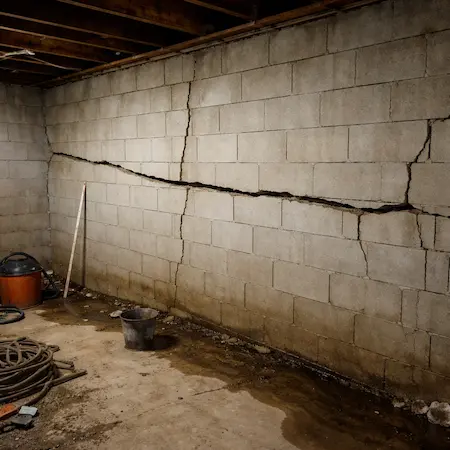
Horizontally cracked block wall with active water intrusion and visible inward bowing.
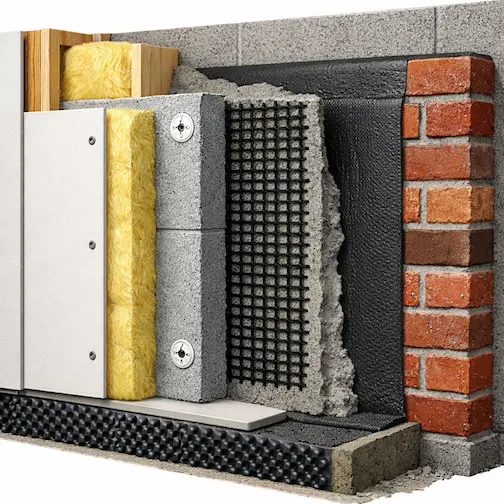
Wall system with carbon fiber reinforcement, waterproofing membrane, and insulated panels.
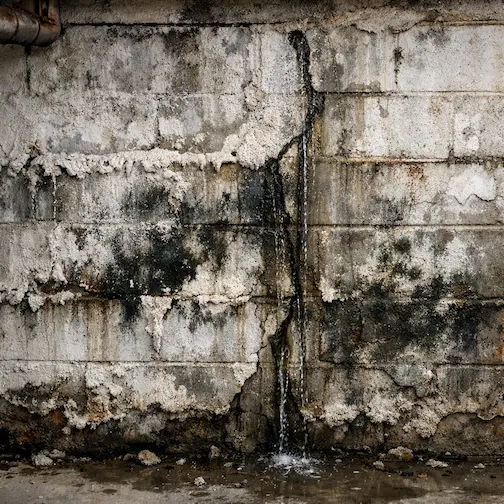
Extensive efflorescence, surface mold, and seeping cracks throughout the basement wall.
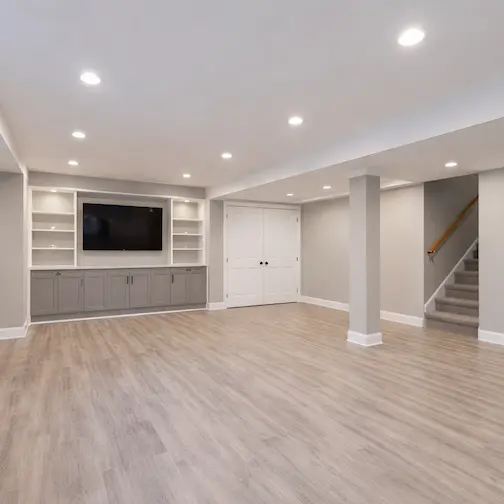
Dry, insulated, and panel-finished walls ready for framing, drywall, and full basement finishing.
Complete Basement Wall System Components
Every component of our basement wall system is selected and positioned to address a specific aspect of basement wall failure. Together they form an integrated solution that manages water, reinforces structure, improves thermal performance, and creates a finished surface ready for whatever you want to do with your basement space. Here is a detailed look at what each component does and why it matters for homes in Northern Colorado.
Dimpled Waterproofing Membrane
The dimpled membrane is the foundation of the waterproofing system. This heavy-duty polyethylene sheet is installed directly against the wall surface from the footing to the rim joist, creating a continuous drainage plane that intercepts water as it passes through the wall and channels it downward toward the perimeter drainage system. The dimple pattern creates an air gap between the wall and the membrane that prevents hydrostatic pressure from building against the wall face, dramatically reducing the forces that cause cracking and bowing over time. Unlike surface-applied sealers, the membrane does not rely on adhesion to the wall to function. It manages water mechanically, which means it continues to work even as the wall surface behind it shifts or develops new cracks.
Perimeter Baseboard Drainage Channel
Water directed downward by the membrane must have a controlled path to exit the basement. The baseboard drainage channel is installed at the floor-wall joint around the perimeter of the basement, capturing water from the membrane and routing it to the sump pump system for removal. The channel is perforated to accept water from both the wall and the floor slab edge, addressing the two most common water entry points in a typical basement. In Northern Colorado, where spring snowmelt can produce sustained high-water-table conditions for weeks at a time, having a reliable drainage pathway is essential to keeping the basement dry during the most demanding periods of the year.
Insulated Wall Panels
Fort Collins winters are cold, and uninsulated basement walls are a significant source of heat loss in homes throughout the region. Our insulated wall panels are installed over the waterproofing membrane and provide R-10 or greater thermal performance, substantially reducing heat loss through below-grade walls and improving the overall energy efficiency of the home. The panels feature a bright white PVC facing that reflects light and creates a clean, finished appearance immediately upon installation. They are moisture-resistant by design and will not support mold growth the way that fiberglass batts installed against a potentially damp wall can. The panel surface is also stud-ready, meaning furring strips and drywall can be attached directly to it for full basement finishing without the need for a separate stud wall built out from the foundation.
Carbon Fiber Straps for Bowing Walls
When basement walls have begun to bow inward under the pressure of saturated soil, waterproofing alone is not sufficient. The structural integrity of the wall must be addressed as well. Carbon fiber straps are bonded vertically to the wall surface at regular intervals across the affected area, providing exceptional tensile strength that resists further inward movement without the bulk or disruption of more invasive repair methods. Carbon fiber is stronger than steel at a fraction of the weight and does not corrode in the damp basement environment. For walls with moderate bowing that has not progressed beyond a certain threshold, carbon fiber straps are one of the most effective and least disruptive stabilization options available.
Wall Anchors for Advanced Lateral Movement
For walls with more significant bowing or lateral displacement, wall anchors provide a stronger stabilization solution that connects the basement wall to stable soil beyond the zone of active pressure. Steel anchor plates are installed against the interior wall face and connected by a steel rod driven through the wall and footing to an anchor plate buried in the yard at a distance from the foundation. Properly installed, wall anchors can be tightened over time to gradually restore the wall closer to its original position as soil conditions allow. This approach is particularly valuable for homes in areas with expansive clay soils, which are common throughout Northern Colorado and which exert especially high lateral forces against basement walls as they cycle through wet and dry periods.
Hydraulic Cement and Crack Injection
Active cracks that are allowing water to flow directly into the basement are addressed before the membrane and drainage systems are installed. Hydraulic cement is used to stop actively flowing water in cracks and joints, setting rapidly even in wet conditions to create an immediate barrier. For dormant or stable cracks, polyurethane or epoxy injection fills the crack completely from face to face, restoring the wall’s integrity at that location and preventing future water infiltration through the crack itself. These crack treatments are a preparation step that makes the larger waterproofing system more effective, not a standalone solution, which is an important distinction when evaluating any basement waterproofing approach.
Why Basement Walls in Fort Collins Face Unique Challenges
Expansive Clay Soils
Much of the Front Range, including the Fort Collins, Loveland, and Greeley areas, sits on soils with significant clay content. Clay soils absorb water and expand dramatically when wet, then shrink and crack when they dry out. This constant volumetric cycling exerts lateral pressure against basement walls during wet periods and pulls away from them during dry periods, creating a cyclical stress pattern that progressively weakens wall materials, opens cracks, and allows more water to infiltrate with each cycle. A basement wall system that manages water before it saturates the surrounding soil reduces the intensity of this cycle and protects the wall from its most damaging effects.
Heavy Spring Snowmelt and Saturation
Northern Colorado’s snowpack melts over a period of weeks in the spring, releasing large volumes of water into the ground over a sustained period that can keep soil moisture levels elevated for months. Homes that experience no basement moisture issues during summer and fall may see significant water intrusion during March, April, and May when the water table rises and soil saturation peaks. Many homeowners make the mistake of assuming their basement is fine because they do not see water in summer, only to discover that spring brings recurring flooding or wall seepage that occurs every year. A properly installed wall system handles peak spring conditions as reliably as it handles average conditions throughout the rest of the year.
Freeze-Thaw Cycle Damage
Fort Collins experiences many freeze-thaw cycles throughout the winter months. Water that has penetrated into small cracks in basement walls freezes and expands, widening those cracks incrementally with each cycle. Over multiple winters, cracks that began as hairline fractures become pathways for significant water intrusion and structural weakness. This freeze-thaw deterioration is particularly common in older homes with poured concrete walls and in concrete block construction where mortar joints are vulnerable to moisture absorption. Addressing cracks and installing a comprehensive waterproofing system before winter arrives each year prevents this freeze-thaw damage from compounding further.
Ready to Protect Your Basement Walls for Good?
Every season you wait, Northern Colorado’s soils, snowmelt, and freeze-thaw cycles are working against your basement walls. A complete basement wall system from Fort Collins Foundation Repair stops that damage in its tracks and transforms your basement into a dry, insulated, and usable space that adds real value to your home. The first step is a free, no-obligation evaluation with our team. We assess your walls, explain exactly what we find, and recommend a solution tailored to your specific situation. No pressure, no guesswork, just honest expertise from professionals who understand what basement walls in this region face.
Contact Us for Your Free Basement Wall Evaluation